Collagen is the main structural protein in skin. It is what keeps skin firm and smooth. Here is what actually happens to it as we age, and which habits and ingredients have evidence behind them.
What collagen does
The middle layer of your skin, the dermis, is a mesh of collagen fibres made by cells called fibroblasts. Types I and III collagen make up most of it. Elastin lets skin spring back, and glycosaminoglycans hold water in that mesh.
What changes with age
A study in the American Journal of Pathology compared skin from young adults (18 to 29) with skin from people over 80. It found:
- Aged skin makes less type I and type III collagen.
- Fibroblasts from older skin produced less collagen in the lab: about 56 ng/mL against 82 ng/mL from young skin.
- In older skin, fibroblasts were less attached to the collagen around them (58% against 78% of the cell surface). Fibroblasts need that physical tension to keep making collagen.
In other words, ageing skin gets caught in a loop. Less collagen means less tension on the cells, which means they make even less collagen.
The sun speeds it up
Ageing from time alone is only part of it. Sun exposure (photoageing) adds wrinkles, roughness and uneven tone on top. In New Zealand's strong UV, this matters a lot.
What has evidence behind it
1. Daily sunscreen
The strongest evidence of anything here. In a randomised trial of 903 adults in Queensland, people who used broad-spectrum sunscreen every day showed no detectable increase in skin ageing over 4.5 years. Their skin aged 24% less than the group who used sunscreen only when they felt like it.
2. Ingredients that signal collagen production
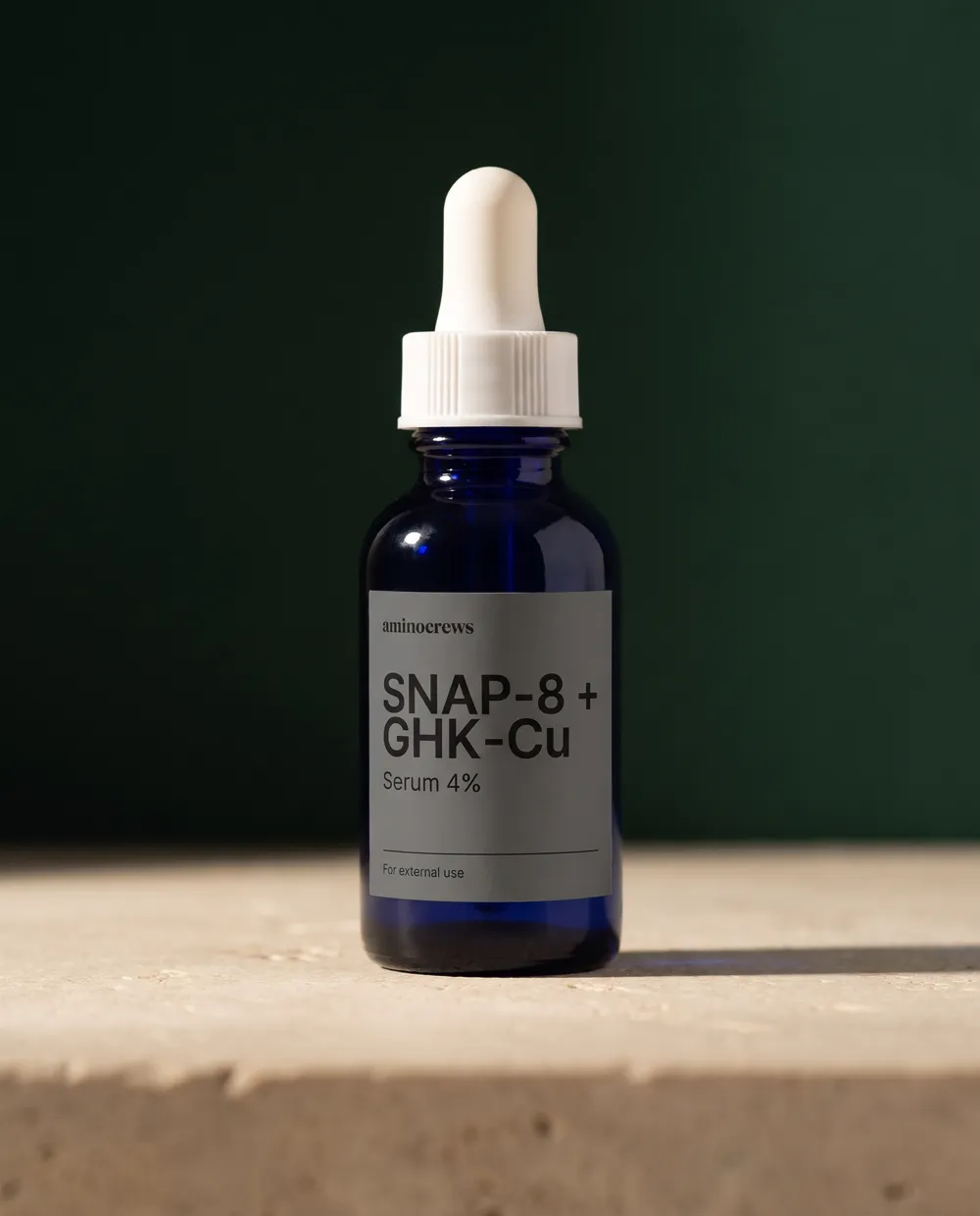
GHK-Cu, a copper peptide the body makes less of with age, has been shown in lab studies to stimulate collagen, elastin and glycosaminoglycans. In one comparison study, collagen increased in 70% of women using a GHK-Cu cream, against 50% with vitamin C cream and 40% with retinoic acid. Read more in What is GHK-Cu?
3. Patience
Collagen is rebuilt slowly. Most of the cream studies above ran for 12 weeks. Any routine needs months, not days, to judge fairly.
The bottom line
Collagen loss with age is real and measurable, and it is a cycle that feeds itself. Daily sunscreen has the strongest proof for slowing visible skin ageing. Ingredients like GHK-Cu aim at the other side, encouraging skin to keep making collagen.