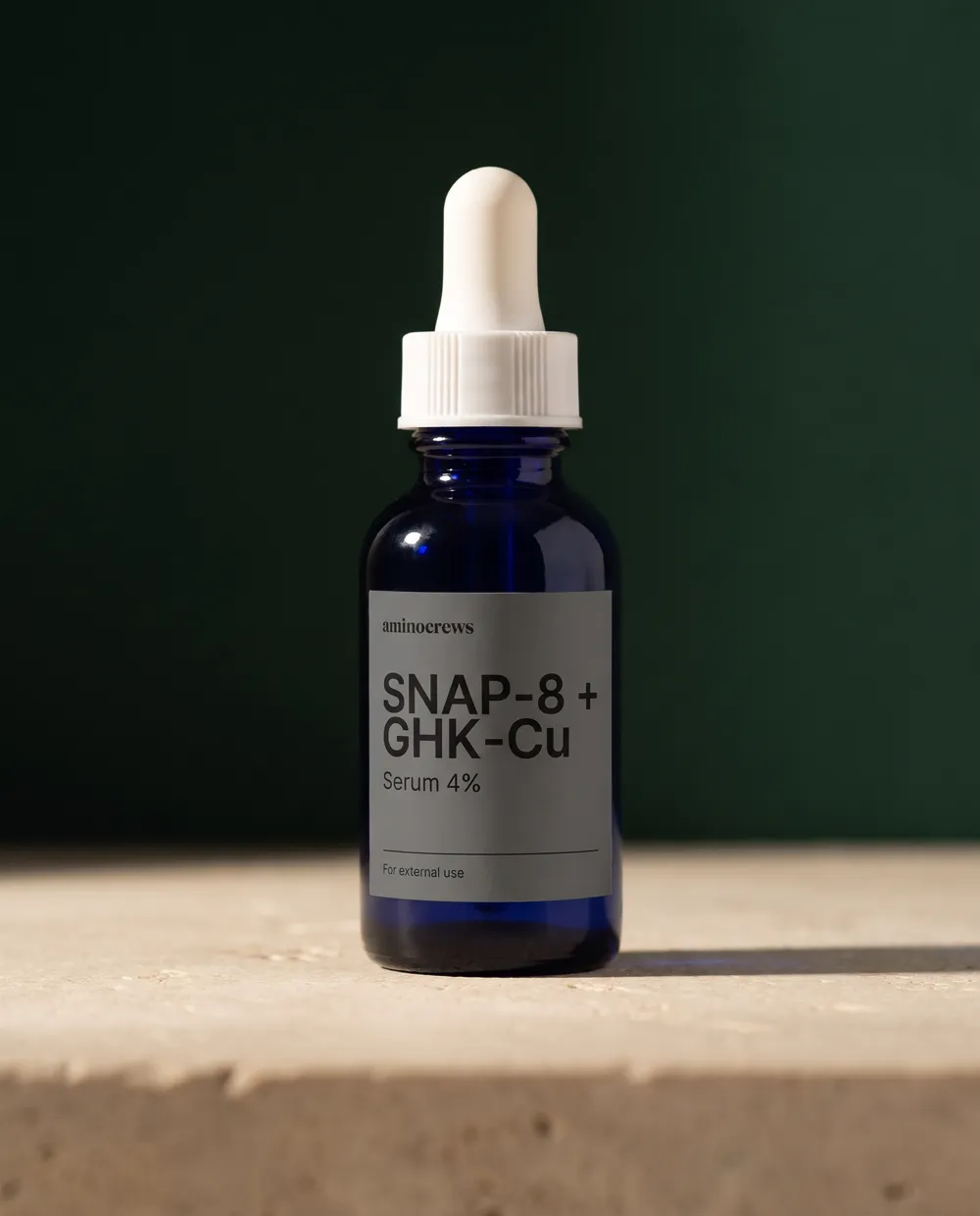
GHK-Cu, often called copper peptide, is one of the most researched peptides in skincare. Unlike many ingredients, it is something your own body already makes. Here is what it is and what the studies found.
What is GHK-Cu?
GHK is a tiny peptide made of just three amino acids: glycine, histidine and lysine. It is found naturally in human blood, saliva and urine. It binds tightly to copper, and GHK-Cu is that copper-bound form. Copper is something the enzymes that build and link collagen need to work.
Your levels fall with age
In blood, GHK sits at about 200 ng/mL at age 20, but falls to about 80 ng/mL by age 60. That is less than half. This drop happens over the same years in which skin becomes thinner and less firm.
What it does in skin
In laboratory and animal studies, GHK-Cu has been shown to:
- stimulate production of collagen and elastin, the proteins that keep skin firm and springy
- increase glycosaminoglycans and decorin, which help skin hold water and organise collagen properly
- regulate both the building and the breaking-down of collagen, which is part of healthy skin remodelling
- support the function of fibroblasts, the cells in skin that make collagen
Gene research has found GHK can turn up or down the activity of thousands of human genes. That may explain why it shows up in so many repair processes, although what this means in practice is still being studied.
What the human studies found
- In a comparison study on skin, collagen increased in 70% of women using a GHK-Cu cream, against 50% with vitamin C cream and 40% with retinoic acid.
- In a 12-week study of 71 women with mild to advanced sun damage, a GHK-Cu facial cream improved skin laxity and clarity, reduced fine lines and wrinkle depth, and increased skin density and thickness.
- In a 12-week study of 41 women, a GHK-Cu eye cream did better than both a placebo and a vitamin K eye cream at reducing lines and wrinkles and increasing skin density.
How to use a GHK-Cu serum
Apply to clean skin, follow the directions on the label, and patch test first on a small area. Serums are for use on skin only. Most of the studies above ran for 12 weeks, so give any skincare change time before judging it.
The honest take
GHK-Cu has more research behind it than most cosmetic peptides, including placebo-controlled studies in women. Many of those studies are summarised in reviews by the same research group, and the human studies are modest in size. It is a well-supported ingredient, not a miracle one.